
23 September
Mobile Phones
Tell us about the mobile phones you have owned in your life.
Which one did you like the most and why?
Tell us about your current phone. Why did you buy it?
What was your first mobile phone?
How often do you change your phone?
What features are most important to you in a phone?
Do you prefer Android or iOS? Why?
What do you think about expensive smartphones? Are they worth it?
How much time do you spend on your phone daily?
What is your favourite mobile app? Why?
Have you ever lost or broken a phone? What happened?
What are the advantages and disadvantages of smartphones?
How has mobile phone technology changed over the years?
Related Words: smartphone, device, touchscreen, battery, charger, signal, network, application, software, hardware, Android, iOS, camera, storage, memory, processor, display, connectivity, internet, Wi-Fi, Bluetooth, notification, screen, upgrade, performance, security, fingerprint, face recognition, portability, communication
Watch the video above and discuss what you learned from it during your Spoken Cafe session
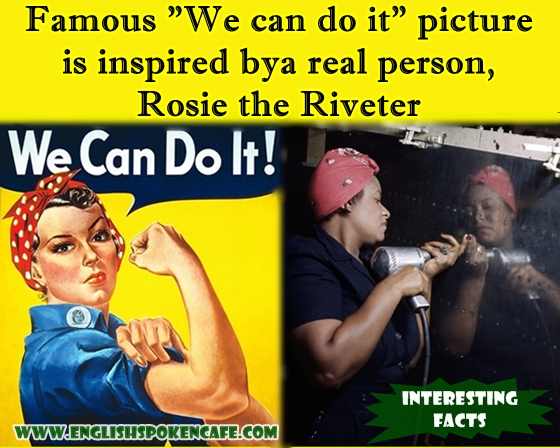
Rosie the Riveter and the Women Who Powered WWII
During World War II, many men went off to fight, leaving a big gap in the workforce. To help with the war effort, women were asked to step into jobs that were traditionally held by men. This was a time when the iconic image of “Rosie the Riveter” became famous. Rosie represented all the strong, hardworking women who took on jobs in factories and shipyards, making supplies like weapons, aircraft, and ships needed for the war.
The image of Rosie the Riveter, showing a woman wearing a blue jumpsuit and flexing her arm, became a symbol of women’s strength and independence. Her face, full of confidence and determination, inspired many women to work in industries that were once seen as jobs only for men. At the time, nearly one out of every four married women in the United States had a job outside of their homes. Many of these women worked in factories, assembling aeroplanes, bombs, and other important military supplies.
One of the most popular jobs for women was in the aviation industry, where they worked as munitions workers, assembling parts for military planes. The famous image of Rosie the Riveter is based on a munitions worker, but she was often portrayed as working in an aeroplane factory. These women were essential to the war effort, and their work helped ensure that the soldiers on the front lines had the equipment they needed to fight.
Interestingly, this image of Rosie the Riveter wasn’t the only one of women working hard during the war. In 1945, there was also a photograph taken of Queen Elizabeth II, who was then a princess, helping change the tyres of military vehicles. This photo served as a reminder that women from all walks of life were contributing to the war effort in their own way.
The work that women did during World War II changed their role in society forever. After the war, many women returned to their homes, but they had gained a new sense of confidence and independence. Their efforts were vital in helping the Allies win the war, and their contributions continue to be remembered today.
Watch the video above and discuss what you learned from it during your Spoken Cafe session
READ/SPEAK
Who is the most successful working woman you know? What successful things does she do, and what makes her successful?
Have you ever had a job that was difficult or unusual for you? How did you feel about it?
Do you think women should be able to do any job they want? Why or why not?
Can you think of any other famous women in history who helped change society?

(in) the middle of nowhere:
Far away from any towns and cities, where few people live:
“He lives in a tiny house in the middle of nowhere.”
LEARN THE IDIOM AND SPEAK
Have you ever been lost in the middle of nowhere? How did you find your way after being lost?