
Visiting Friends
1. How often do you visit your friends, and who do you usually visit?
2. When did you last visit a friend? What did you do?
3. When did you last host a friend? What did you do during the visit?
4. Do you prefer meeting friends at home or outside?
5. When did you last gather with your close friends outside? Where did you go and what did you do?
6. Do you have a gathering plan soon with your friends? What’s your plan?
Related Words: visit, guest, host, tea, coffee, snacks, talk, laugh, play games, plan, invite, afternoon, evening, cake, chocolate, fruit, chairs, room, sofa, photos, music, chat, holiday, celebration, greet, goodbye, flowers, doorbell, shoes, polite
EXAMPLE ANSWERS: Visiting Friends
1. I visit friends not very often. In 2-3 months, usually. I visit my close friends in Akçay, and we talk about life.
2. I last visited a friend 6 months ago. He is planning to get married soon. We talked about his plans till the morning.
3. My friend Abduş visited me about 5-6 months ago. We watched a movie together, ate dinner, and we sat on the balcony and chatted till the morning.
4. We prefer gathering at home. Because the outside is too noisy for us. We are getting old.
5. I gathered with some close friends 4-5 months ago in Kaıdköy. A very close friend came from the Netherlands. We chatted till midnight, and we had a lot of fun.
6. We are planning to gather with some close friends in Greece. One of my best friends lives there, and he invited us for the summer.
Watch the video above and discuss what you learned from it during your Spoken Cafe session
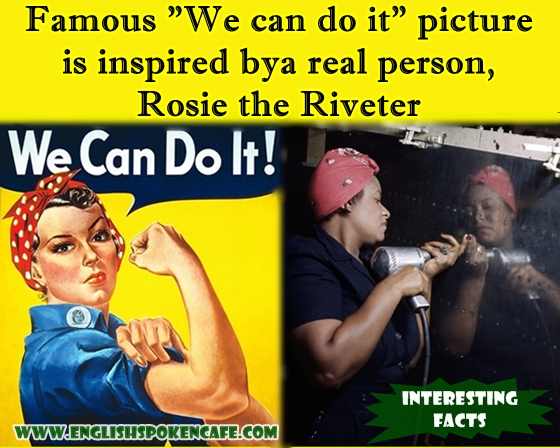
Rosie the Riveter: A Symbol of Working Women
During World War II, Rosie the Riveter became a famous and iconic image. Rosie was not a real person, but she was a symbol of the strong and hardworking women who helped the war effort.
At that time, many men were fighting in the war, so women needed to work in the defence industry. These women worked in factories and shipyards, making weapons, planes, and other war supplies. By 1945, nearly one in four married women in the U.S. worked outside their homes.
The image of Rosie the Riveter was a big motivation for women during the war. She showed that women could do jobs that were usually done by men. Rosie’s famous slogan, “We Can Do It!” inspired women to join the workforce and support their country.
Even Queen Elizabeth II (then a princess) worked during World War II. In 1945, she was photographed changing tyres on a military truck. This showed that women from all walks of life were ready to help during the war.
Rosie the Riveter remains an important symbol of women’s strength and independence. She reminds us of the important role women played in history during World War II.
Watch the video above and discuss what you learned from it during your Spoken Cafe session
READ/SPEAK
Do you know any successful women? What are they successful at?
Can you think of other symbols or people who inspire you? Who are they?
What jobs do you think women are good at?

(in) the middle of nowhere:
Far away from any towns and cities, where few people live:
“He lives in a tiny house in the middle of nowhere.”
LEARN THE IDIOM AND SPEAK
When did you last go out of town? Where did you go and did you like your trip?