
One Day in the Past
1. If you could go back in time, what year would you visit? Why would you go back to that year?
2. Tell us about those years and what you did at that time?
3. Where did you live, and who were your close friends?
4. If you had the chance to see the future, what would you like to see about your future?
5. If you could meet any old friends now, who would you meet and why?
Related Words: past, year, visit, meet, eat, photo, future, return, childhood, grandparents, car, bus, games, toys, shops, letter, money, history, clothes, house, time, memory, street, museum, food, people, friend, family, story, photo album
EXAMPLE ANSWERS: One Day in the Past
1. I would go back to my first year at university, to the year 2000. I had great friends and learnt a lot that year
2. That year, I came to Istanbul from Soma. At first, it was hard, but later, I got used to Istanbul. I met my university friends and rented an apartment with my friends
3. I lived in Istanbul in mahy many different places. First, I lived in Edirnekapı dormitory, then I moved to Cevizlibağ Atatürk dormitory. After those we rented a flat with friends.
4. I would meet with my primary school friends. I am curious about what they do now.
Watch the video above and discuss what you learned from it during your Spoken Cafe session
The Decline of Empathy in Today’s Society
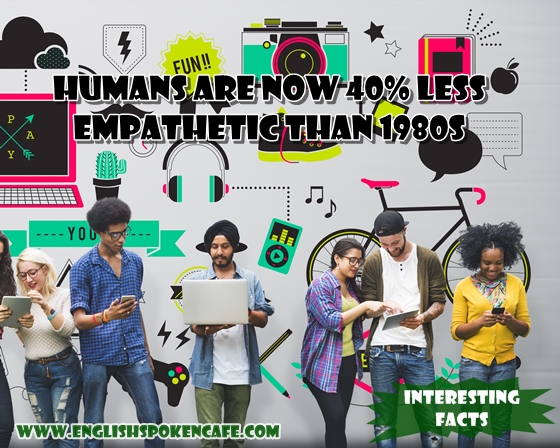
A study done in 2009 by Sarah Konrath at the University of Michigan found that people today are 40% less caring than people in the 1980s. According to Konrath, today’s youth are more focused on themselves and more competitive.
Researchers believe that social media has played a role in this change. It has reduced the amount of face-to-face communication, which is important for building empathy. In the past, people spent more time interacting in person, which helped them understand and care about each other’s feelings.
Today, many young people feel that caring for others takes up too much of their time. They believe they need to focus on themselves and their goals instead. As a result, it has become harder for them to empathise with others.
Watch the video above and discuss what you learned from it during your Spoken Cafe session
READ/SPEAK
Who is the most selfish person you know? And who is the most helpful person, and why do you think so?
Do you think people today are less caring than before?
Do you like spending time with people face-to-face or on social media?
Can you remember a time when you helped someone?

Stop and accept a small loss, rather than continue and risk losing everything.
LEARN THE IDIOM AND SPEAK
When did you last lose something? When, where and how did you lose it?